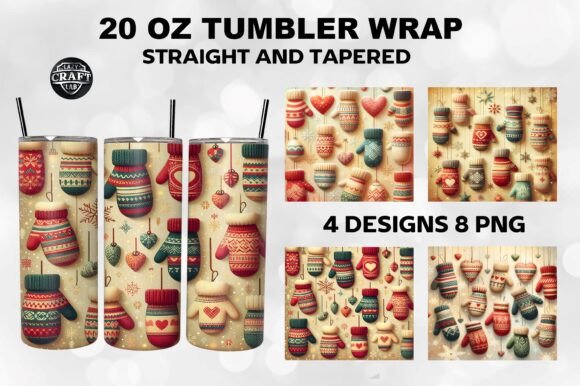
Pair of Mittens with Snowflakes Tumbler
A Designer’s First Look: Charm, Clarity, and Quiet Confidence
When I opened Pair of Mittens with Snowflakes Tumbler, I didn’t see just another holiday graphic—I saw a quiet moment of winter warmth. Two mittens, slightly overlapping, each adorned with a delicate snowflake motif—no heavy outlines, no cluttered borders, no forced cuteness. The composition breathes. It’s balanced but not rigid, festive but not frantic. As an embroidery designer who’s stitched hundreds of seasonal pieces for Etsy shops, boutique clients, and custom gift lines, that first impression matters deeply. This isn’t a design shouting for attention—it’s one that invites touch, slows the eye, and feels intentional. That tone translates directly to how it behaves under needle and thread.
Where It Lives Best: Real Projects, Real Stitching
I recently used Pair of Mittens with Snowflakes Tumbler as the centerpiece for a small-batch run of embroidered cotton tea towels—intended for a local craft fair and a holiday pop-up shop. The mittens sat neatly in the lower corner, sized to 3.2" wide, with clean satin-stitched edges and subtle fill-stitch snowflakes. On medium-weight fabric with tear-away stabilizer, every curve held shape, and the negative space between mittens kept the design from feeling dense or overwhelming. It worked equally well on unbleached linen (soft, rustic) and navy cotton twill (crisp, modern). That versatility is rare—and valuable.
It also translated beautifully to baby onesies and toddler sweatshirts. Because the mittens are rounded—not angular or overly detailed—they scale down without losing legibility. No tiny fingers or intricate cuffs to vanish in fill stitch. That makes Pair of Mittens with Snowflakes Tumbler especially useful for makers who sell personalized baby embroidery or nursery decor. I’ve seen too many “cute” designs collapse at 2.5" hoop size; this one stays readable, even when stitched in tonal thread on light fabric.
Where to Pause—and Test—Before Committing
This isn’t a one-size-fits-all embroidery file. Its gentle curves and open layout mean it performs best on stable, low-stretch fabrics: cotton canvas, denim, twill, linen, and midweight knits with proper cutaway stabilizer. On thin jersey or highly textured terry cloth? I’d test first—and likely simplify the snowflake detail manually or reduce stitch density. The design leans into clean lines, so dense fill areas or tight corners (like cap brims or curved tote handles) need extra attention. If you’re planning to use Pair of Mittens with Snowflakes Tumbler on a structured cap or a curved ceramic mug wrap, remember: sublimation graphics don’t always translate stitch-for-stitch to embroidery. You’ll want to assess whether the snowflakes have enough isolation and whether the mitten outlines will read clearly at your target size.
Also worth noting: because it’s offered as a PNG tumbler wrap, there’s no built-in embroidery file structure—no stitch count, no layering cues, no color separation. That means you (or your digitizer) will need to interpret the visual rhythm of the design: where satin stitch suits the mitten edges, where light fill works for snowflakes, and where running stitch could define subtle texture. Don’t assume automatic digitizing will honor its quiet elegance.
What It Adds to Your Finished Product—Beyond the Stitch
Customers notice intention. When someone holds a handmade pillow cover or a personalized tote bag featuring Pair of Mittens with Snowflakes Tumbler, they don’t just register “winter.” They sense care—the kind that comes from choosing a design with breathing room, thoughtful spacing, and restrained detail. That builds trust. For Etsy sellers and small shop owners, that perceived quality lifts perceived value. A $38 embroidered apron feels like a keepsake, not a novelty, when the motif carries this kind of quiet confidence.
It also supports brand consistency. Whether you’re building a cozy, nature-inspired line or a minimalist holiday collection, Pair of Mittens with Snowflakes Tumbler fits without demanding attention. It enhances—not overpowers—your product photography, mockups, and packaging. And because it avoids cliché (no oversized scarves, no cartoonish faces), it stays fresh across seasons and customer age groups—from baby gifts to retirement home welcome kits.
Practical Notes Every Embroidery Designer Should Keep Handy
- Always test on scrap fabric first—especially if using dark thread on light fabric or vice versa. Check how the snowflake details hold up at your intended size.
- Review stitch density before stitching on lightweight or delicate items. Lighter fill and slightly wider satin stitch spacing often preserve softness better than dense coverage.
- Confirm hoop size compatibility. While the design scales well, very small hoops (<2.5") may require simplifying snowflake complexity manually.
- Inspect small details in your embroidery software—look for stray anchor points or unnecessary jump stitches that could snag during trimming.
- Test black-and-white mockups to assess contrast and silhouette strength—this tells you how well it’ll read on varied backgrounds.
- Use appropriate stabilizer: medium-weight cutaway for knits, tear-away for stable wovens, and fusible + tear-away for lightweight linens.
- Verify licensing before selling finished items or bundling Pair of Mittens with Snowflakes Tumbler into digital embroidery bundles—since it’s marketed as a tumbler wrap PNG, commercial embroidery rights aren’t automatically included.
Final Thought: A Design That Serves the Maker, Not Just the Moment
Pair of Mittens with Snowflakes Tumbler doesn’t try to be everything. It’s not bold enough for festival merch, too refined for mass-market screen printing, and too subtle for oversized sweatshirt backs. But within its lane—thoughtful handmade goods, personalized gifts, boutique apparel, and quiet holiday storytelling—it delivers with uncommon grace. It’s the kind of design that makes your embroidery machine hum a little smoother, your customers pause a beat longer, and your small shop feel more like a curated experience than a transaction. That’s not just good design. That’s good business.