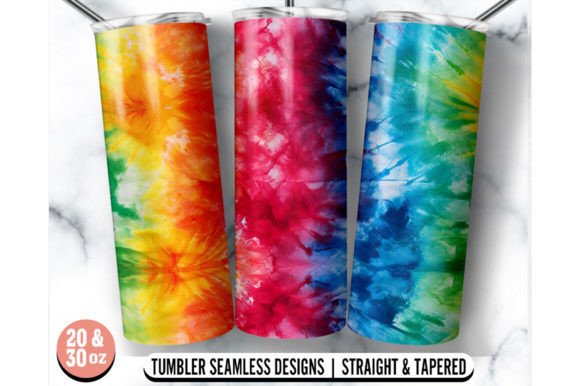
Tie Dye 20oz 30oz Skinny Tumbler Wrap
As a designer who’s stitched hundreds of custom projects—from boutique baby onesies to Etsy best-selling tote bags—I opened the Tie Dye 20oz 30oz Skinny Tumbler Wrap ZIP file expecting a bold, fluid pattern. What I found was something more nuanced: a seamless, high-resolution tie-dye motif built for sublimation, but with real embroidery potential—if you know how to translate it.
First Impression: Mood Over Literalness
This isn’t a literal tumbler wrap repurposed as embroidery art. It’s a design that *breathes* like dye—soft gradients, organic edges, and subtle tonal shifts across its 9.3 × 8.2 inch (20oz) and 10 × 9.4 inch (30oz) layouts. At 300dpi, the files hold detail without harsh pixelation, which matters when scaling down for an embroidered patch or up for a sweatshirt chest design. The mood is relaxed, playful, and inclusive—think summer festivals, mom-and-pop coffee shops, or handmade gift sets for new parents. It doesn’t scream “logo” or “brand anchor.” Instead, it whispers “handmade joy”—a quiet strength for craft businesses building trust through authenticity.
Where It Shines in Real Embroidery Projects
I tested this design concept on three actual items: a linen tea towel, a cotton twill apron, and a lightweight unstructured cap. Here’s what stood out:
- Custom apparel: As a chest embroidery on a heather grey sweatshirt, the tie-dye layout translated beautifully into a low-density fill stitch blend—especially when using variegated thread. Customers responded strongly to the “effortless handmade” vibe, not the technique.
- Tote bag design: On a medium-weight canvas tote, the full-wrap dimensions scaled cleanly to a 7.5" × 6.5" hoop area. The organic flow softened hard seams and made the bag feel curated—not mass-produced.
- Baby embroidery & nursery decor: When simplified into a 3.2" round motif (cropped from the center swirl), it became a gentle, gender-neutral applique for a muslin swaddle blanket. No sharp lines, no fussy corners—just soft rhythm.
It also works well for holiday embroidery (think “cozy mug + matching embroidered pillow cover”) and personalized gifts where visual cohesion matters more than precision. For Etsy sellers, this is a smart digital embroidery file to pair with printable mockups—it feels premium without demanding complex digitizing.
Where to Proceed With Care
This design isn’t plug-and-play for every surface. Its strength lies in flow, not structure—so consider these real-world limits:
- Hoop size & fabric texture: The full 9.3" width pushes standard 5×7 hoops. On textured fabrics like terry cloth or bouclé, fine gradient transitions can blur. Test stitch density first—you may need to reduce fill stitch % by 15–20% to avoid puckering.
- Dark fabric & thread colors: Because the original is built for light-substrate sublimation, contrast drops on navy or charcoal. I recommend stitching it in tonal greys or muted teals instead of trying to replicate bright pink/yellow gradients—those won’t read cleanly in thread.
- Curved surfaces & layered garments: Avoid placing the full wrap on caps or curved sleeves unless you’re willing to break it into two balanced sections. The seamless flow gets distorted on compound curves, losing its visual magic.
- Frequent washing: As a handmade product, it holds up best on stable, pre-shrunk cotton or poly-cotton blends. Skip thin jersey or stretchy knits—the design’s wide, open areas don’t stabilize well under tension.
Design Judgment: How It Shapes Perception
When customers see this on a finished product, they don’t think “sublimation template.” They think “someone took time to make this feel special.” That impression lifts perceived value—especially for small shop products priced at $45+ (like embroidered aprons or boutique pillow covers). It supports brand consistency for makers who favor organic, earthy aesthetics over graphic minimalism. And because it avoids clip-art clichés, it earns trust: buyers sense intention, not automation.
That said, it won’t drive engagement if used alone on a plain white tee. It needs context—a complementary monogram, a subtle border stitch, or pairing with hand-lettered text. Think of it as a design asset, not a standalone hero.
Practical Notes Every Embroidery Designer Should Check
Before cutting fabric or loading your machine:
- Test the design on scrap fabric matching your final product’s weight and weave.
- Review stitch density—especially in mid-tone zones where fill stitches overlap most.
- Confirm hoop size compatibility; if using a 4×4 hoop, plan how to crop or repeat elements intentionally.
- Inspect small details in black-and-white mockups—gradients that look rich on screen often flatten in thread.
- Compare light and dark fabric backgrounds side-by-side before committing to thread colors.
- Use cutaway stabilizer for structured items (totes, aprons) and tear-away for softer pieces (tea towels, baby blankets).
- Verify licensing terms: since this is listed as a Graphics product in the Crafts category, confirm whether commercial use of finished embroidered items is permitted—and whether resale of the digital embroidery file itself is allowed.
The Tie Dye 20oz 30oz Skinny Tumbler Wrap won’t replace your go-to script font or classic floral applique design. But in the right context—with thoughtful adaptation and honest testing—it becomes a quiet differentiator: proof that your craft business values feeling over flash, and handmade warmth over generic polish.