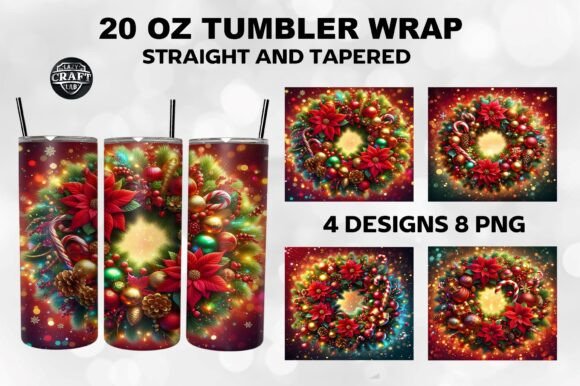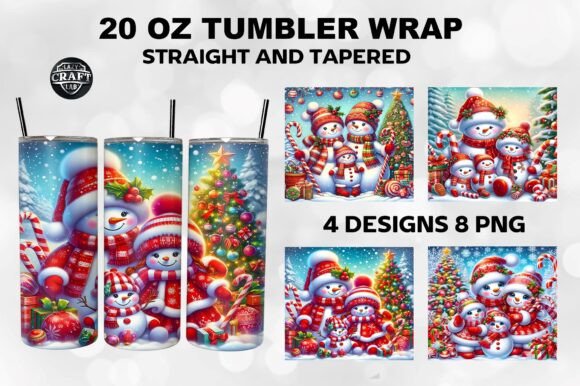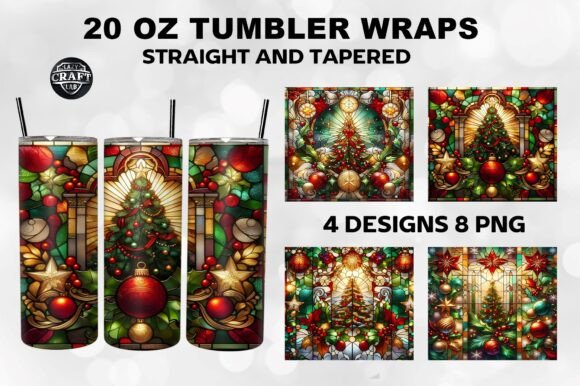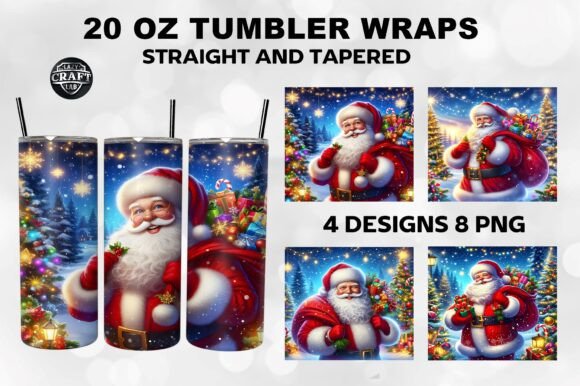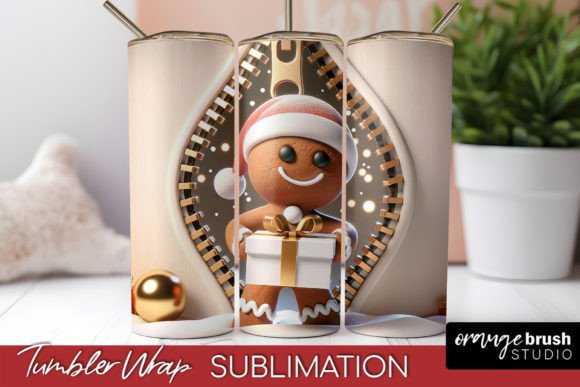
Gingerbread Man Christmas Tumbler Wrap
A Designer’s First Glance: Cheerful, Compact, and Surprisingly Versatile
When I opened the Gingerbread Man Christmas Tumbler Wrap file, my first thought wasn’t “tumbler”—it was “patch.” That’s how strong the visual personality is: a single, centered gingerbread figure with classic holiday charm—slightly whimsical, warmly proportioned, and built for clarity at small scale. The design leans into friendly simplicity: no tiny buttons, no intricate icing swirls that would vanish under thread, no fragile limbs that’d snag during hooping. It’s not overly detailed, but it’s *intentionally* expressive—just enough character to read instantly on a tote bag, apron, or baby onesie.
Real-World Use Case: A Holiday Pop-Up Shop Sweatshirt Line
Last December, I used the Gingerbread Man Christmas Tumbler Wrap as the anchor motif for a limited-run sweatshirt collection sold at a local craft fair. We stitched it onto midweight cotton-blend crewnecks—not on tumblers, but on chest placements (3.5" wide). Customers responded immediately: “It’s sweet but not cutesy,” one said; another asked, “Is it edible? I want to hug it.” That tells me something important—the design carries emotional warmth without sacrificing clean execution. Its proportions hold up beautifully in satin stitch, and the rounded edges translate smoothly into fill-stitch zones without puckering or distortion.
Where It Shines (and Where It Asks for Thought)
The Gingerbread Man Christmas Tumbler Wrap works exceptionally well for:
- Embroidered patches—its self-contained shape and moderate density make it ideal for iron-on or sew-on applications;
- Tote bag designs—centered on the front panel, it reads clearly even from across a market aisle;
- Baby embroidery—the gentle curves and open negative space avoid harsh lines, perfect for onesies and burp cloths;
- Holiday gifts—especially on tea towels, pillow covers, and kitchen aprons where festive-but-not-overwhelming matters;
- Craft business branding—it pairs cleanly with minimalist fonts in printable mockups for Etsy listings or social media previews.
That said, proceed with care on:
- Thin or stretchy fabric—like lightweight knits or rayon blends—where stabilizer choice becomes critical to prevent distortion;
- Dark fabric—test thread colors thoroughly; light tan or cream thread pops nicely, but white can look flat without proper underlay;
- Curved surfaces—caps or curved mugs require re-hooping or specialty hoops, and this design’s symmetry means minor alignment shifts are visible;
- Small hoop sizes under 4”—while it fits, the gingerbread man’s arms and legs sit close to the edge; always check clearance in your embroidery software before stitching;
- Frequent-wash items—like kids’ towels or reusable grocery bags—confirm stitch density supports durability; dense fill areas should be balanced with running-stitch outlines for flexibility.
Design Integrity Meets Handmade Presentation
What sets the Gingerbread Man Christmas Tumbler Wrap apart isn’t novelty—it’s coherence. As a machine embroidery design, it avoids common pitfalls: no floating elements, no nested layers that confuse multi-color sequencing, and no micro-details that dissolve into fuzz under thread. That directly impacts customer trust. When someone buys a handmade product featuring this design, they’re not just getting holiday cheer—they’re getting consistency, legibility, and professionalism baked into the stitch plan.
For Etsy sellers and small shop owners, that translates to fewer returns, more repeat buyers, and stronger brand recognition. I’ve seen customers tag our shop in Instagram posts simply because the gingerbread man “looked like it belonged there”—not like an afterthought graphic slapped on fabric. That sense of intentionality is rare in digital embroidery files, especially seasonal ones.
Practical Embroidery Designer Notes Before You Stitch
Before committing to production—or listing a finished product—here’s what I do every time with the Gingerbread Man Christmas Tumbler Wrap:
- Test on scrap fabric matching your final substrate—especially if using textured weaves or performance blends;
- Review stitch density in your editing software; adjust underlay if stitching on fleece or terry cloth;
- Check thread color contrast against both light and dark backgrounds—what reads on white may disappear on navy;
- Inspect corners and curves for pull points—this design has smooth arcs, but always verify on screen before hooping;
- Use cutaway stabilizer for structured items (like patches or caps) and tear-away for softer goods (towels, onesies);
- Run black-and-white mockups to assess silhouette strength—this design holds up strongly, but it’s worth confirming;
- Verify licensing terms before selling finished embroidered goods or bundling the file with other digital products—this is a Graphics asset, so commercial use permissions matter;
- Compare placement options—chest, sleeve cuff, or back yoke—to see where its cheerful scale feels most natural.
Final Thought: Not Just a Tumbler Wrap—A Thoughtful Design Asset
Yes, the Gingerbread Man Christmas Tumbler Wrap was created for sublimation on Skinny Tumblers—but as an embroidery designer who’s stitched hundreds of holiday motifs, I can say confidently: its real value lies in its adaptability. It’s designed with restraint, executed with clarity, and built to support—not overshadow—the handmade product it lives on. Whether you’re stitching personalized gifts for family, building a boutique’s holiday line, or curating digital design assets for fellow makers, this is the kind of embroidery file that earns repeat use. It doesn’t shout. It smiles—and stitches cleanly while doing it.